Every business eventually needs something printed bigger than a printer can handle. A banner for the front of the building, graphics for an exhibition stand, a panel for a shop fit, a backdrop for a product launch. The industry name for all of it is large format printing, and if you have just typed that phrase into Google, this guide explains what you are actually buying: the machines, the difference between flexible and rigid jobs, how pricing works, and when a standard product will do the same job for less.
What Counts as Large Format
There is no official cut-off, but in practice large format means print measured in metres rather than centimetres: anything from a one metre poster up to graphics covering an entire wall or hoarding. The point of the category is that these jobs run on specialist wide printers, and the rules that govern them are different from ordinary print. Material choice matters more, artwork resolution matters more, and the price is driven by size rather than page count.
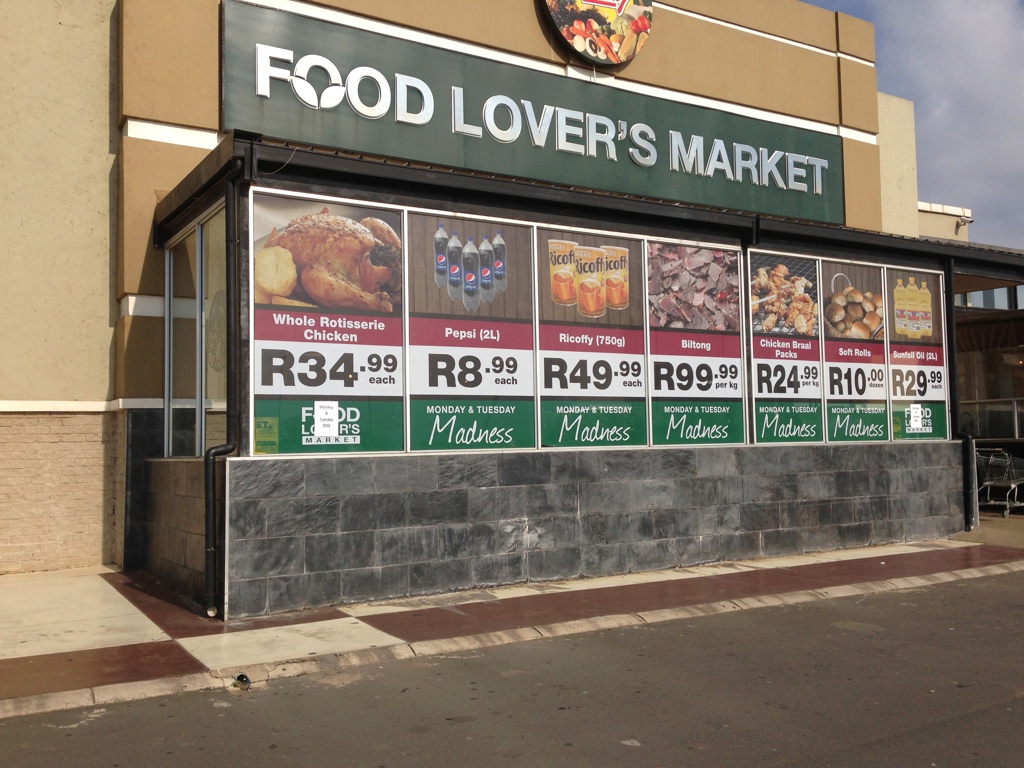
Most large format work for UK businesses falls into a few familiar jobs: outdoor banners, exhibition and event graphics, window and wall displays, site hoardings, and signage panels. Some of those have become standard products with their own hardware, more on that below, and the rest is custom work priced per job.
The Two Machines: Roll-to-Roll and Flatbed
Almost every large format job runs on one of two kinds of printer, and knowing which one your job needs is the fastest way to talk usefully with any printer.
Roll-to-roll printing feeds flexible material through the machine from a roll, prints it, and winds it out the other side. It is the process for anything that bends or hangs: banner material, printed fabric and other flexible media, in continuous runs that can be metres long. If your job will be stretched on a frame, hung from a building or fixed to a fence, it is a roll-to-roll job.
Flatbed printing works the other way around. The material lies flat and rigid on the print bed, and the print heads pass over it, laying UV-cured ink directly onto the surface. That is the process for boards and panels, print that needs to hold its own shape rather than hang. Signage panels, display boards and rigid graphics are flatbed jobs.
Branding Warehouse runs both, which is why the large format service can cover jobs that do not fit a standard product: if it is flexible it goes on the roll-to-roll, if it is rigid it goes on the flatbed.
How Large Format Pricing Works
Large format has no standard price list, and any printer who gives you a price before asking your dimensions is guessing. The cost of a job is driven by four things:
- Size. Print is priced by area, so a 3m banner is roughly twice the print of a 1.5m one.
- Material. Flexible banner material, fabric and rigid panel stock all cost differently, and outdoor-rated material costs more than indoor.
- Lifespan. A graphic for one weekend event and a graphic that lives outdoors for a year are different specifications, even at the same size.
- Quantity. Repeats of the same artwork are cheaper per unit than one-offs.
That is why the fastest route to a real number is to send dimensions rather than a description. Tell the printer the width and height, whether the print lives indoors or outdoors, and how long it needs to last, and you will get a usable quote back. You can send exactly that to us through the quote form.
Getting Artwork Right at Metres Wide
Artwork mistakes that are invisible on screen become very visible at three metres wide. Three rules protect any large format job:
- Vector first. Logos and text built as vector artwork (PDF, AI, EPS) stay razor sharp at any size. A logo lifted off a website and enlarged will print soft and pixelated.
- Resolution at print size. Photographic imagery needs to be high resolution at the finished dimensions, not at the size it fills your screen. A photo that looks crisp at 10cm wide can fall apart at 2m.
- Bleed and safe margins. Keep critical content away from the edges so trimming and finishing cannot clip it.
Our artwork templates page has setup files for the standard products, and for custom jobs we will confirm artwork specifications when we quote.
When a Standard Product Beats a Custom Job
Here is the honest part of the guide: a lot of searches for large format printing end at a product that already exists, with the hardware problem already solved, for less than a custom job would cost.
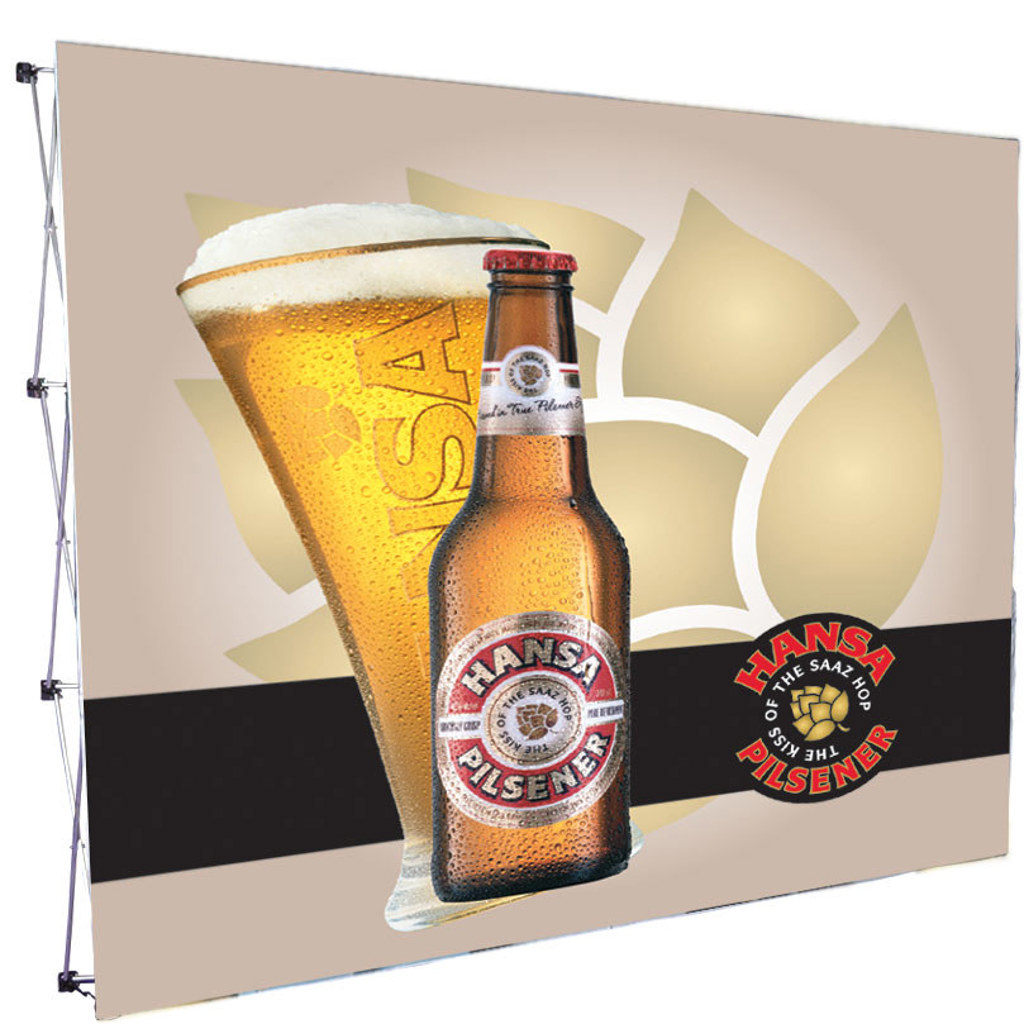
- Need a big promotional wall? A backdrop banner is large format print supplied as a kit with its own frame.
- Pavement or forecourt signage? An A-frame sign is the purpose-built format.
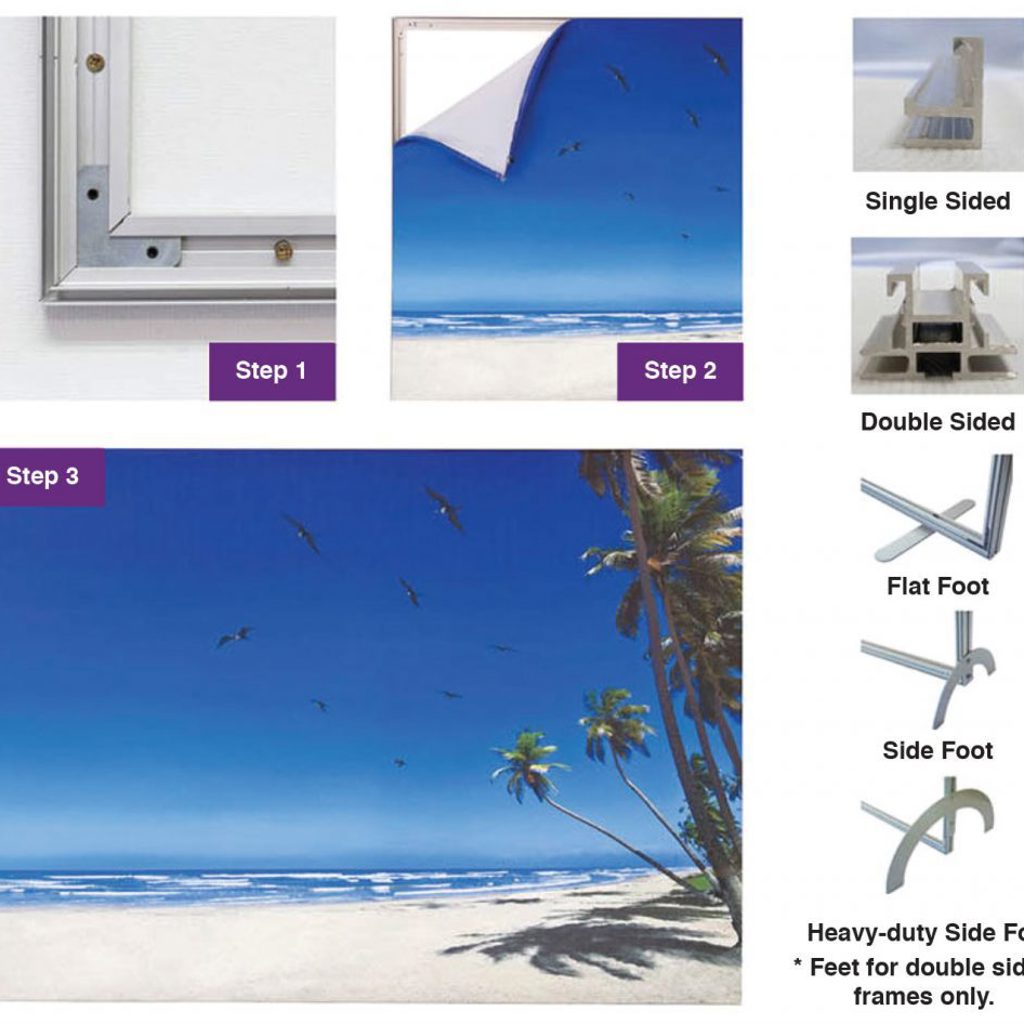
- A graphic that stands up at events? Pull up banners and fabric frames are large format print with the stand included.
- Branding a fence line or barrier? Fence branding is a standard product too.
Custom large format printing is for everything those formats do not cover: odd sizes, specific materials, one-off installations and oversized graphics. If you are not sure which side of that line your job falls on, ask, and we will tell you straight if a standard product does it cheaper.
Branding Warehouse prints large format work in-house in the UK on roll-to-roll and flatbed UV printers, alongside the standard event branding range. Send your dimensions for a price, or browse the display range to see the ready-made formats first.